Marion Square Rev War History Comes to Life In New Installation

Governor McMaster, state and local leaders celebrate newest addition to The Liberty Trail
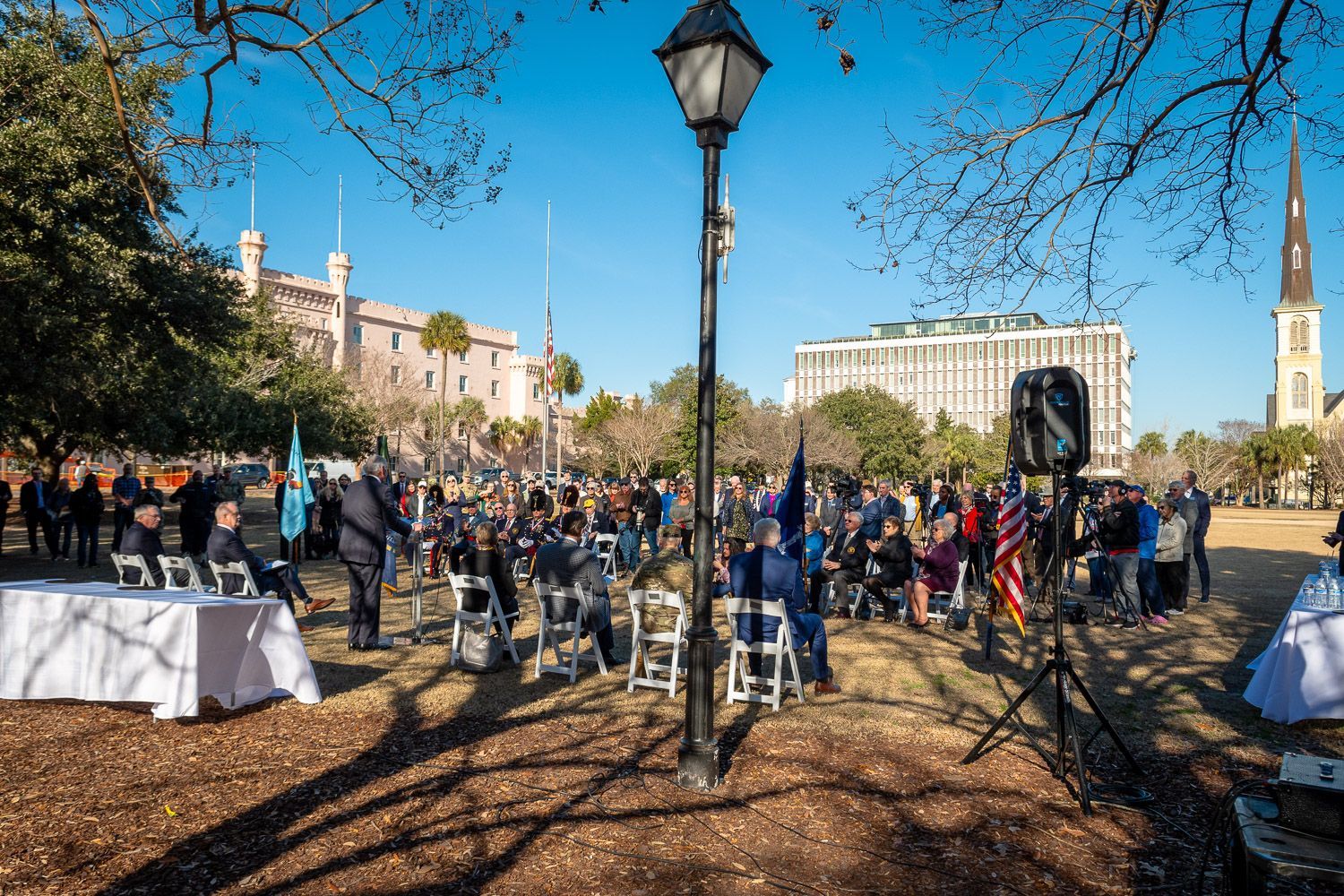
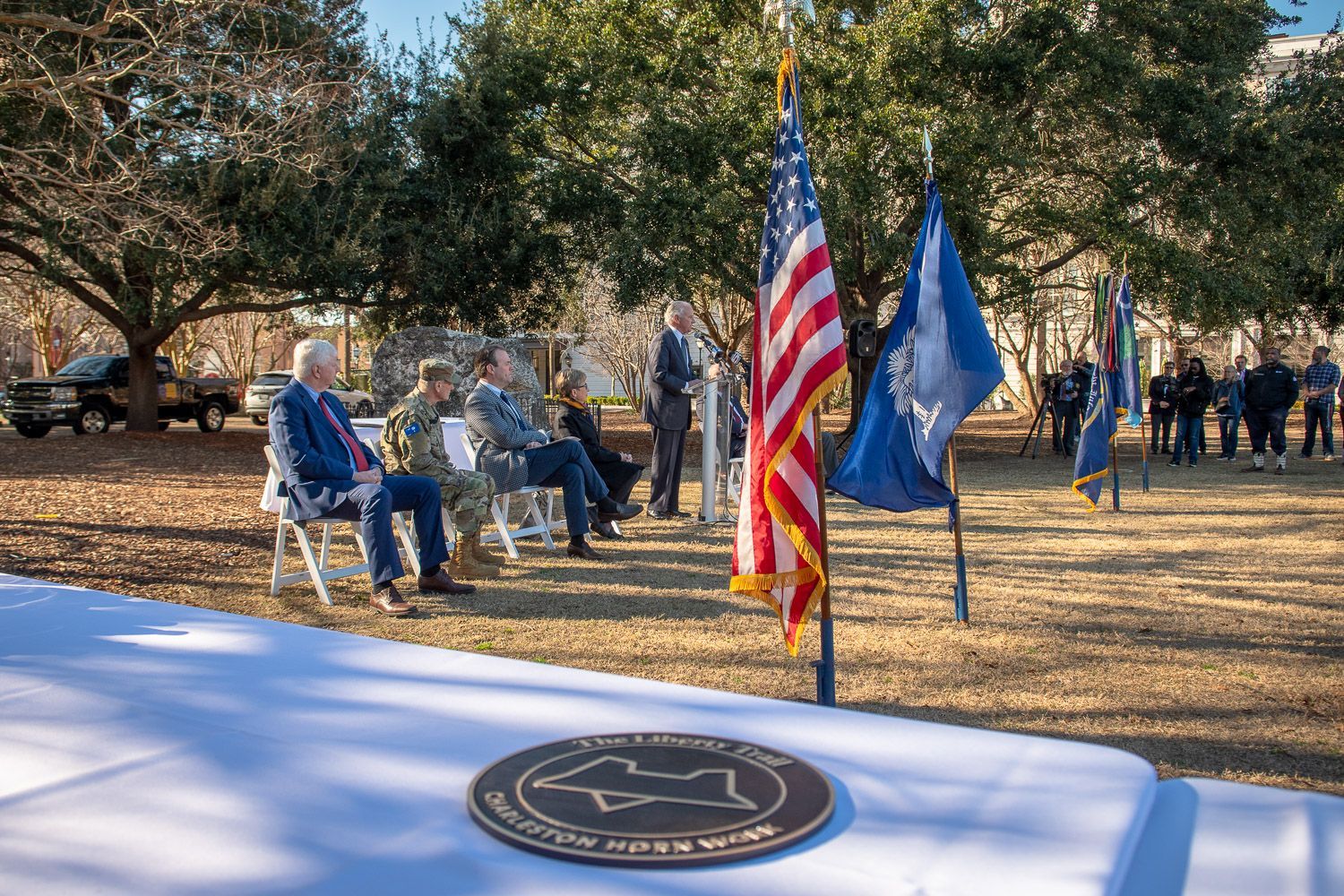
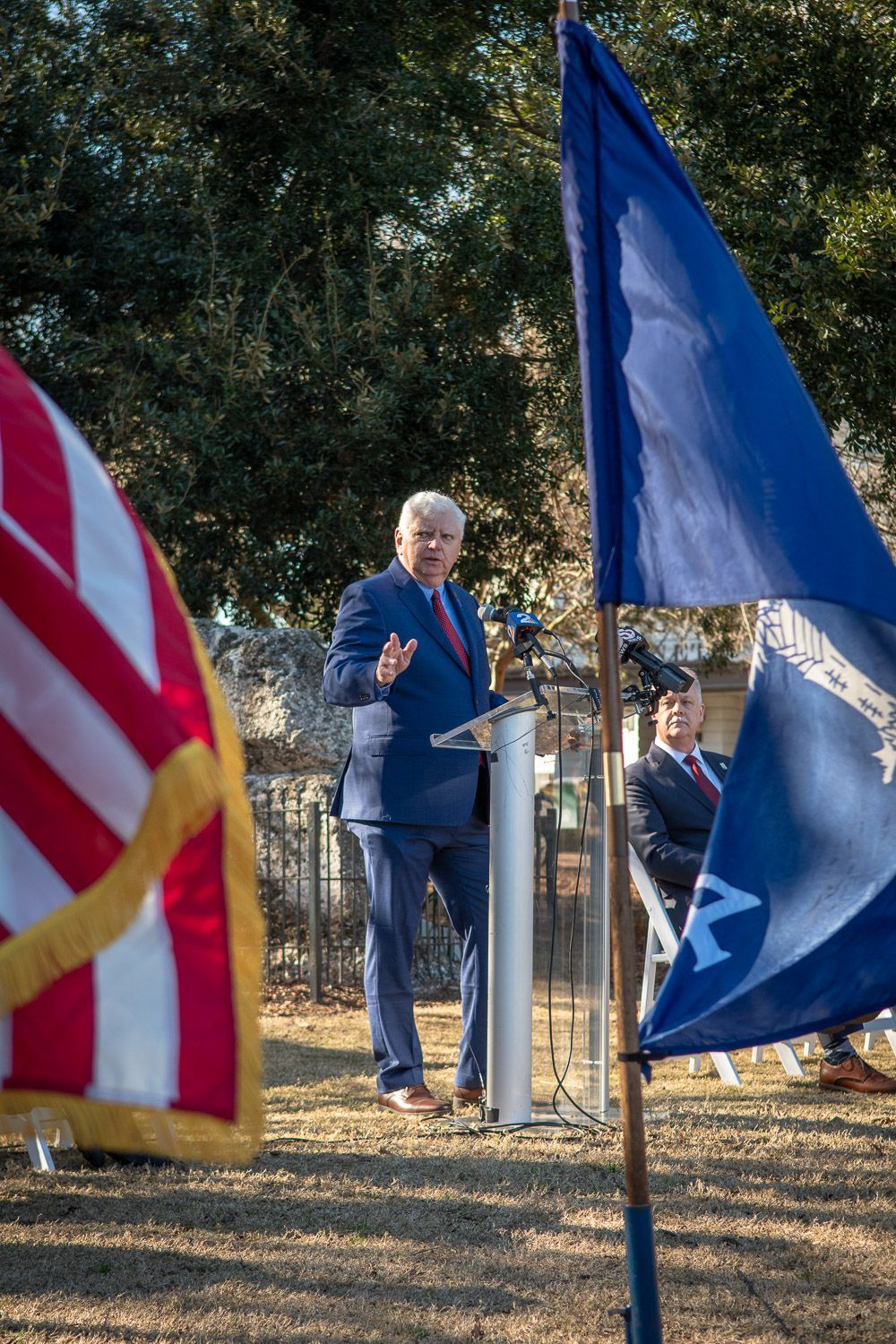
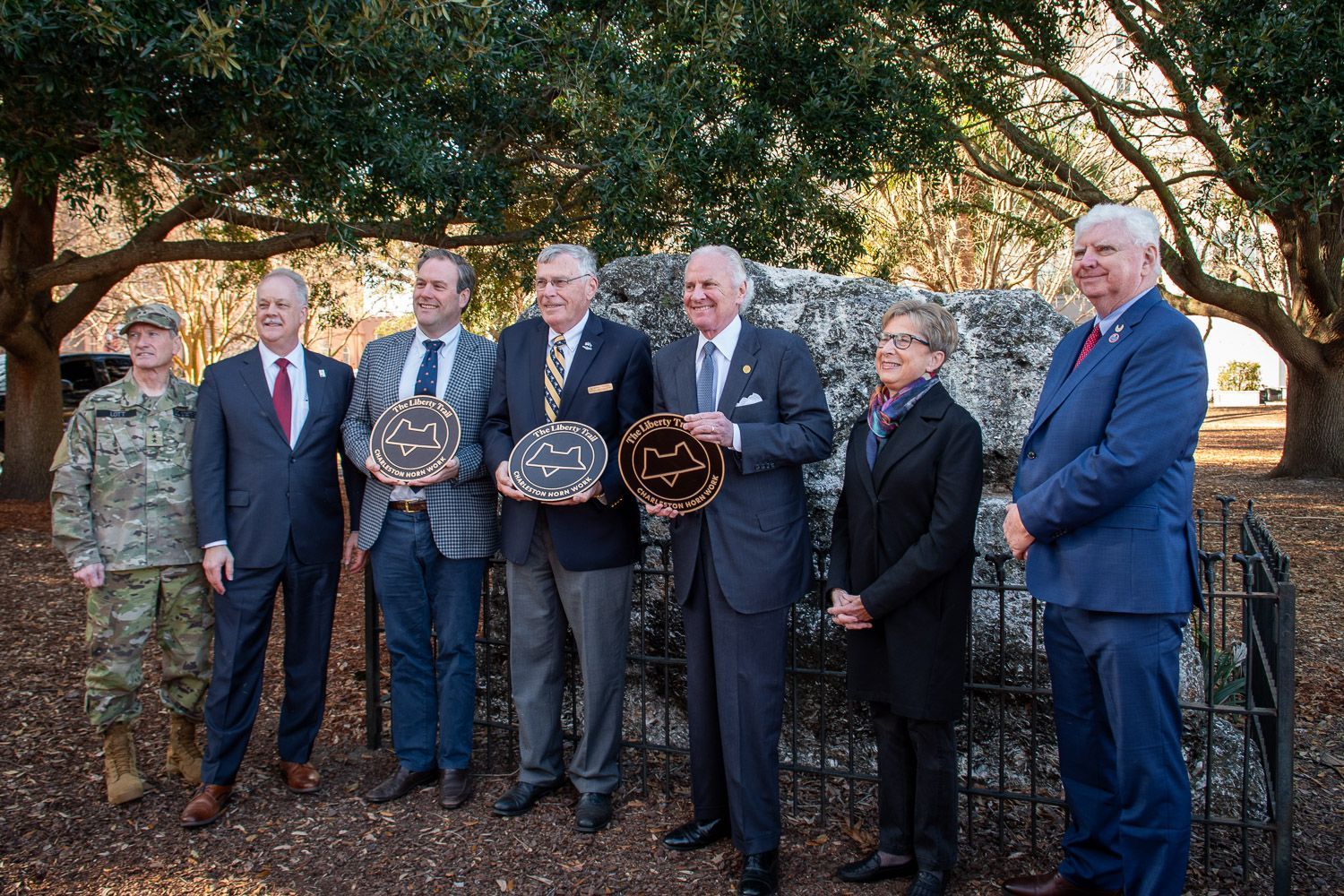
Charleston, S.C. – February 1, 2024 – The Liberty Trail today unveiled a series of interpretive markers outlining the historic footprint of an archaeological and historical treasure in Charleston’s popular Marion Square. The 32 bronze plates follow the path of the Revolutionary War Horn Work, each marker sharing a part of the story of this large fortification built in 1758 to defend the state’s oldest port city.
“Today’s celebration honors the craftsmen who constructed this intimidating fortification and the Patriots who defended Charleston from the British,” commented Rick Wise, interim executive director and CEO, South Carolina Battleground Trust. “Just as we are grateful for those stalwart hearts of nearly 250 years ago, we are immensely thankful for the many partners who helped document this incredible historic resource and contributed to its interpretation.”
Constructed of tabby, a mixture of shells, sand and lime, the Horn Work was a massive fortification spanning almost three city blocks. The structure and its surrounding ditch, or moat, occupied a space measuring approximately six to eight acres. The tabby walls, which extended to the east and west of the city gate that entered on King Street, measured between six and seven hundred feet across. The elevation of the front (north) wall was about 24-feet high. A small remnant of the Horn Work has long remained visible in Marion Square, intriguing generations of visitors, but the exact location of the underground foundation traces was only discovered by the project using ground-penetrating radar in 2020.
Speaking at today’s ceremony Governor Henry McMaster reflected on the state’s Revolutionary War history and the significance of this site. “Through the Liberty Trail and other historic preservation initiatives throughout the state, we better tell the history of South Carolina and give those who bravely fought for our freedom the recognition they deserve," said Governor Henry McMaster. "As we approach our nation's 250th anniversary, let us continue to tell our story and take pride in being a South Carolinian.”
Pinpointing and interpreting the Horn Work location took the combined effort of many experts and the cooperation of many entities. Nic Butler with the Charleston County Public Library and author and Charleston County Museum Director Carl Borick provided ample research. The Board of Field Officers of Fourth Brigade, which owns Marion Square, Clemson University, College of Charleston, the City of Charleston, Charleston County Public Library, Charleston Museum, and the South Carolina Institute of Archeology and Anthropology were all invaluable with their assistance.
“I believe that it speaks volumes about the rich and complex history of Charleston that as we enter what I intend to be a new era of smart growth for this city, we continue to make historical discoveries that inform our past and thus our future,” said Charleston Mayor William Cogswell. “It is important to honor history, to learn from history so that we can continue to prosper in ways the brave soldiers who died here never could have dreamed. That is their legacy. This is how we honor them. And this is how we serve the citizens of this fine city.”
The Marion Square markers are the most recent addition to The Liberty Trail, an innovative driving route and heritage tourism initiative designed to connect key Revolutionary War battlefields throughout South Carolina. David Duncan, president of the American Battlefield Trust, noted that ultimately this work will yield a gateway experience for The Liberty Trail. “Visitors to Charleston are steeped in the city’s historic fabric,” he said. “When they experience this piece of the Liberty Trail, we invite them to continue their journey through time by venturing out to the South Carolina battlefields on which the question of American
independence was decided.”
The Liberty Trail will expand the interpretive experience in Marion Square later this year through the use of augmented reality (AR). Visitors will be able to see a digital recreation of the Horn Work and events that took place there nearly 250 years ago.
For more information on The Liberty Trail initiative, including historic background and a list of those sites that are part of the Initial Phase of the project, visit www.thelibertytrail.org or download The Liberty Trail Mobile Tour app from the Apple Store or Google Play. As The Liberty Trail takes shape, partners, friends and history enthusiasts are invited to follow its progress on social media using the hashtag #TheLibertyTrail.
###
About The Liberty Trail
The Liberty Trail—developed through a partnership between the American Battlefield Trust and the South Carolina Battleground Trust—connects battlefields across South Carolina and tells the captivating and inspiring stories of this transformative chapter of American history. For more information on The Liberty Trail, visit www.thelibertytrail.org.
Media Contact
Jennifer Howard
843.709.4192